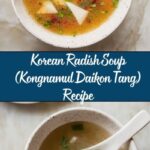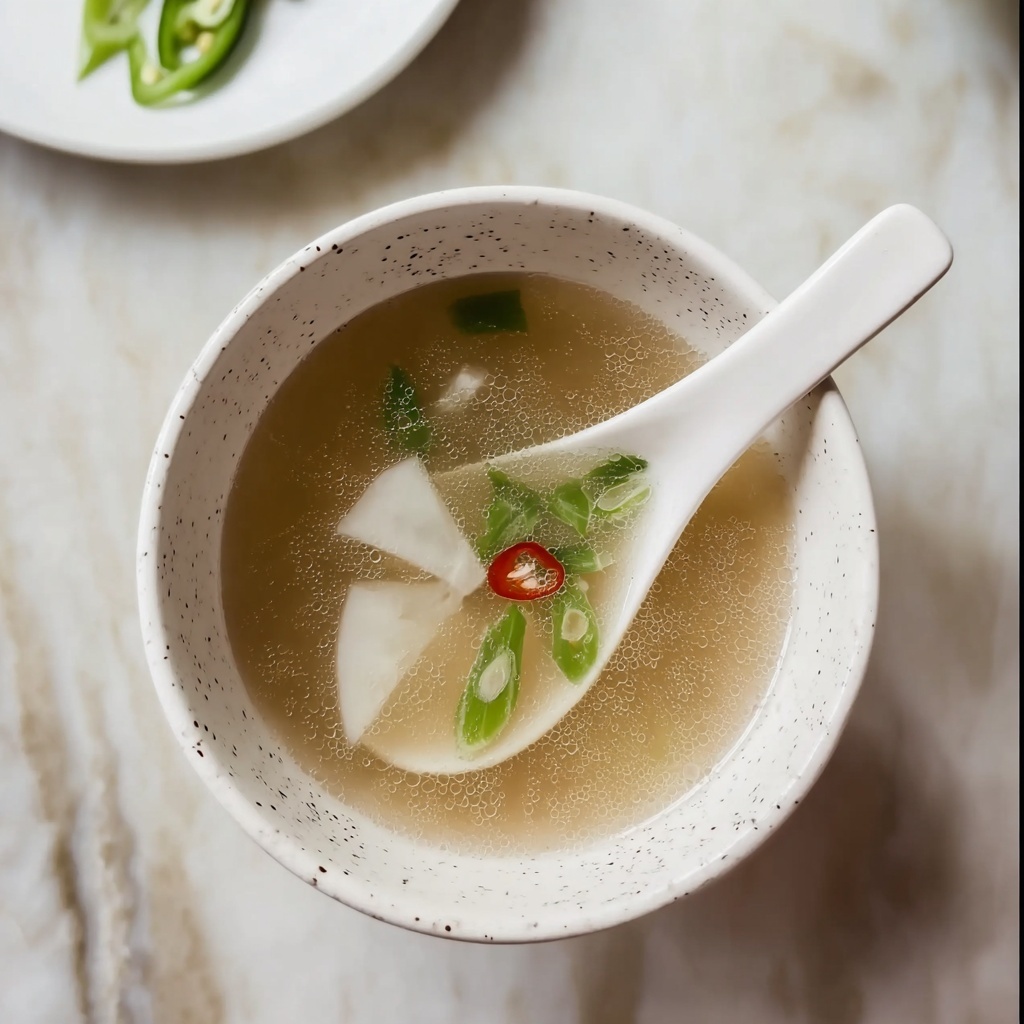
If you are craving a warm, nourishing bowl of comfort that’s both simple and packed with flavor, this Korean Radish Soup (Kongnamul Daikon Tang) Recipe is an absolute must-try. The crisp, subtly sweet Korean radish, also known as daikon, is the star of this soup, creating a broth that feels like a cozy hug on chilly evenings. Each ingredient brings a special touch to the bowl—from the umami-rich kelp and shiitake mushroom to the toasty sesame oil—and the result is a beautifully balanced soup that feels wholesome and deeply satisfying. Whether you’re new to Korean cooking or a longtime fan, this recipe is easy to make, nourishing, and perfect for any occasion.

Ingredients You’ll Need
Don’t be intimidated by the ingredient list; these essentials are exactly what make the soup shine. Every item plays a crucial role in building layers of flavor, texture, and aroma—from the crispness of the radish to the subtle earthiness of the mushrooms. Let’s gather these simple but mighty ingredients that turn this beloved Korean soup into something unforgettable.
- Korean radish (daikon), 4 cups: This crisp vegetable gives the soup its signature flavor and texture, lending sweetness and a tender bite.
- Sesame oil, 2 tsp: Adds a nutty richness that elevates the broth and fills your kitchen with an irresistible aroma while cooking.
- Water or vegetable broth, 6 cups: Use vegetable broth if you want a deeper, more savory foundation for the soup.
- Kelp/dashi kombu, 1 piece: Infuses umami into the soup, making it truly special and complex without overpowering.
- Dried shiitake mushroom, 1 piece: Enhances the earthy notes of the broth, giving it a comforting depth that’s hard to beat.
- Garlic, 3 cloves minced: For that aromatic essence every good soup needs, bringing warmth and a touch of pungency.
- Gluten-free soy sauce or coconut aminos, 1-2 tbsp: Adjust to achieve the perfect balance of savory goodness that sings in every spoonful.
- Salt, 1 tsp: Strengthens the overall flavor; feel free to season to your liking.
- White pepper, 1/4 tsp: Adds a gentle heat and subtle complexity without overshadowing the other flavors.
- Optional vegan ‘beef’ alternative: A delicious way to add protein and hearty texture without any meat.
- Optional sesame seeds: Sprinkle on top for a delightful crunch and attractive finish.
- Optional fresh green onion, sliced: Freshens up the soup with a burst of color and bright flavor when served.
How to Make Korean Radish Soup (Kongnamul Daikon Tang) Recipe
Step 1: Prepare the Radish
Start by peeling the Korean radish and slicing it very thinly, then cut those slices into triangle shapes. This not only makes the pieces perfect for quick cooking but also gives your soup a beautiful visual appeal. The thin radish pieces will absorb all the delicious broth flavors wonderfully.
Step 2: Sauté the Radish
Heat 2 teaspoons of sesame oil in a pot over medium-high heat, then add the diced radish. Sauté for about 2 to 3 minutes until it becomes slightly translucent and starts to smell deliciously toasted. This step helps deepen the radish’s flavor before adding liquid.
Step 3: Add Green Onions for Aroma
Toss in the sliced green onions and continue sautéing for a few more minutes. This releases their signature fragrance, layering more complexity into your soup’s base that is inviting and fresh.
Step 4: Build the Broth
Now drop in the kombu piece, dried shiitake mushroom, and minced garlic, then pour in your 6 cups of water or vegetable broth. These ingredients work together to create a broth full of umami and earthy notes that are nothing short of magic.
Step 5: Simmer Until Tender
Bring everything to a gentle boil, then reduce the heat so it simmers quietly. Let it cook for about 12 to 15 minutes until the radish turns tender yet retains a slight bite, perfect for that satisfying spoonful.
Step 6: Season Perfectly
Stir in 1 to 2 tablespoons of gluten-free soy sauce along with 1 teaspoon of salt, tasting as you go to ensure it suits your palate. Let the soup simmer for an additional 3 minutes to allow all the flavors to marry beautifully.
Step 7: Serve with Love
Ladle the hot soup into bowls and sprinkle with optional sesame seeds, extra white pepper, and sliced green onions. These finishing touches brighten the dish and add texture and color to your comforting bowl of Korean Radish Soup (Kongnamul Daikon Tang) Recipe.
How to Serve Korean Radish Soup (Kongnamul Daikon Tang) Recipe
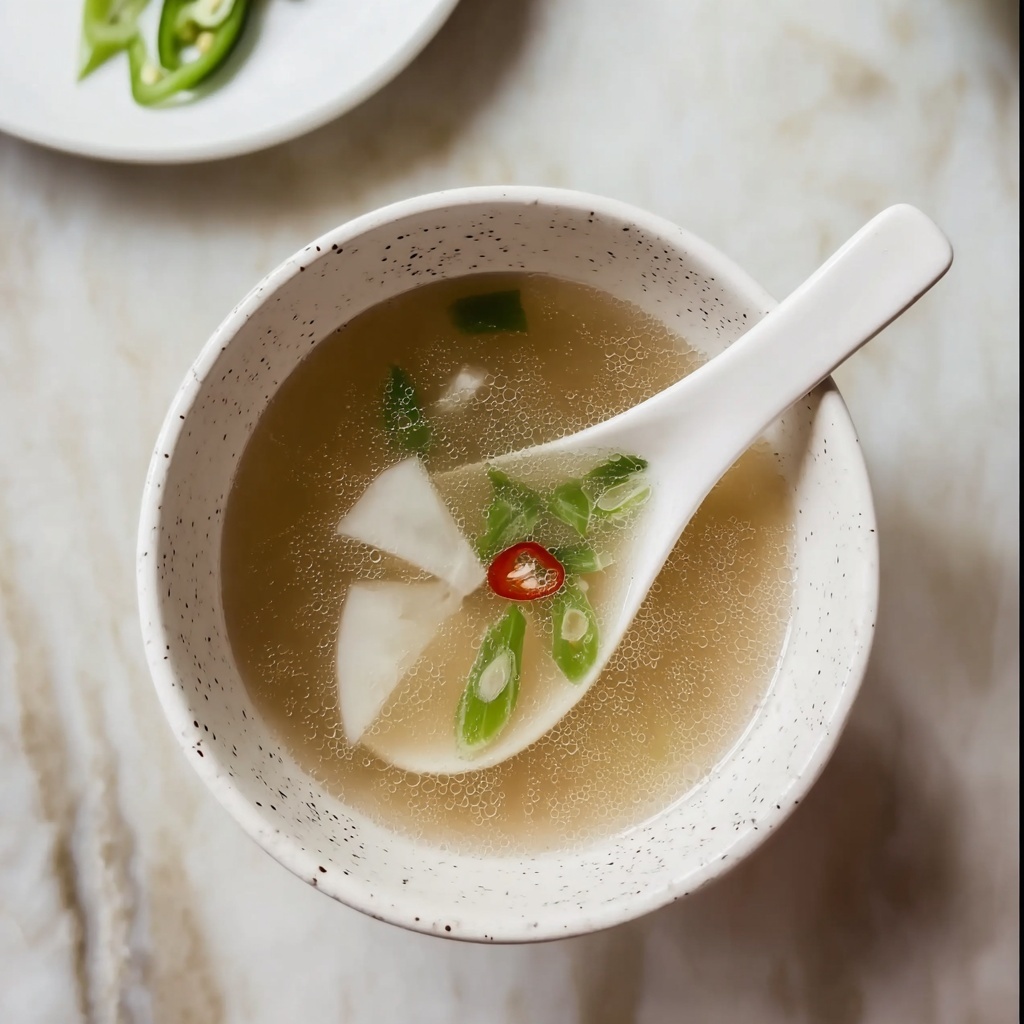
Garnishes
Fresh green onions, toasted sesame seeds, and a dash of white pepper are classic garnishes that add contrast in flavor and texture. They bring brightness, a slight nutty crunch, and a gentle heat that perfectly complements the mild broth.
Side Dishes
This soup pairs beautifully with steamed rice and a variety of Korean banchan (side dishes), such as kimchi, seasoned spinach, or spicy cucumber salad. These sides offer vibrant flavors and textures that round out the meal and keep it exciting.
Creative Ways to Present
For a modern twist, serve your Korean Radish Soup (Kongnamul Daikon Tang) Recipe in individual stone bowls to keep it piping hot longer. You can also top it with a spoonful of gochujang (Korean chili paste) for those who like their soups with a kick of spice. A drizzle of chili oil adds a luxurious layer of heat and color that makes this humble soup feel extra special.
Make Ahead and Storage
Storing Leftovers
Place leftover soup in an airtight container and store it in the refrigerator for up to 3 days. The flavors actually deepen beautifully overnight, making it perfect for enjoying the next day.
Freezing
This soup freezes well for up to 2 months. Be sure to cool it completely before transferring to a freezer-safe container. When you’re ready, thaw overnight in the fridge for the best texture and flavor retention.
Reheating
Reheat gently on the stove over medium-low heat, stirring occasionally until warm throughout. Adding a splash of water or broth can help refresh the consistency, as radish can sometimes soak up liquid during refrigeration.
FAQs
Can I use regular daikon if I can’t find Korean radish?
Absolutely! Regular daikon radish works just fine and will deliver a similar crunchy texture and mild flavor, making it a great substitute.
Is this soup suitable for vegans?
Yes, this Korean Radish Soup (Kongnamul Daikon Tang) Recipe is naturally vegan when you use vegetable broth and skip any animal products. The umami from kelp and shiitake mushrooms adds richness without meat.
Can I add protein to the soup?
Definitely! Adding a vegan ‘beef’ alternative or even tofu cubes can boost protein content while keeping the dish light and delicious.
What can I use instead of kelp for umami?
If you don’t have kelp, you can increase the amount of dried shiitake mushrooms or add a splash of soy sauce to enhance the savory depth of the broth.
How spicy is this soup?
This recipe is mild and soothing by default. If you like more spice, try adding a touch of red pepper flakes or a spoonful of gochujang when serving.
Final Thoughts
This Korean Radish Soup (Kongnamul Daikon Tang) Recipe is truly one of those heartwarming dishes that feels like a celebration of simple, honest ingredients working in perfect harmony. It’s quick enough for weeknights but special enough to impress guests. Give it a go, and I promise you’ll find yourself coming back to this cozy bowl again and again.
Print
Korean Radish Soup (Kongnamul Daikon Tang) Recipe
- Prep Time: 10 minutes
- Cook Time: 20 minutes
- Total Time: 30 minutes
- Yield: 4 servings
- Category: Soup
- Method: Stovetop
- Cuisine: Korean
- Diet: Gluten Free
Description
A comforting and flavorful Korean Radish Soup made with crisp daikon radish, infused with umami-rich kombu and shiitake mushroom, seasoned with garlic, sesame oil, and gluten-free soy sauce. This easy-to-make soup is perfect for cozy nights, offering a light yet hearty broth with optional vegan protein additions and fresh garnishes.
Ingredients
Main Ingredients
- 4 cups Korean radish (daikon), peeled and diced into triangle shapes
- 6 cups water or vegetable broth
- 1 piece kelp/dashi kombu
- 1 dried shiitake mushroom
- 3 cloves garlic, minced
- 1–2 tbsp gluten-free soy sauce or coconut aminos
- 1 tsp salt
- 1/4 tsp white pepper
Additional Ingredients
- 2 tsp sesame oil
- 1 optional vegan ‘beef’ alternative
- 1 optional sesame seeds for garnish
- 1 optional fresh green onion, sliced for garnish
Instructions
- Prepare the Radish: Peel the Korean radish (daikon) and slice it into thin pieces. Then, dice those slices into triangle shapes to ensure quick and even cooking.
- Sauté Radish: In a pot, heat 2 teaspoons of sesame oil over medium-high heat. Add the diced radish and sauté for about 2-3 minutes until the pieces turn slightly translucent, which helps develop flavor.
- Add Green Onions: Toss in the sliced green onions, if using, and continue to sauté for another 2-3 minutes until fragrant, adding a fresh aromatic layer to the soup.
- Add Broth Ingredients: Place the kombu piece, dried shiitake mushroom, and minced garlic into the pot. Pour in 6 cups of water or vegetable broth to build a savory base.
- Simmer the Soup: Bring the mixture to a gentle boil, then reduce the heat and let it simmer for 12-15 minutes, or until the radish is tender and the broth is infused with the umami flavors.
- Season the Soup: Stir in 1-2 tablespoons of gluten-free soy sauce and 1 teaspoon of salt according to taste. Allow the soup to simmer for an additional 3 minutes to blend the seasonings well.
- Optional Protein Addition: If using the vegan ‘beef’ alternative, add it during the last few minutes of simmering to warm through without overcooking.
- Serve and Garnish: Ladle the soup into bowls. Sprinkle with optional sesame seeds, an extra pinch of white pepper, and fresh green onion slices to add texture, aroma, and visual appeal.
Notes
- Using vegetable broth instead of water deepens the flavor profile of the soup.
- Adjust soy sauce quantity based on your preferred saltiness and savory balance.
- The vegan ‘beef’ alternative adds protein and heartiness, but can be omitted for a lighter soup.
- Simmer gently to avoid overcooking the radish, which should remain tender but not mushy.
- For a gluten-free option, ensure that soy sauce used is certified gluten-free or substitute with coconut aminos.
- This soup is best served fresh but can be refrigerated for up to 2 days; reheat gently before serving.