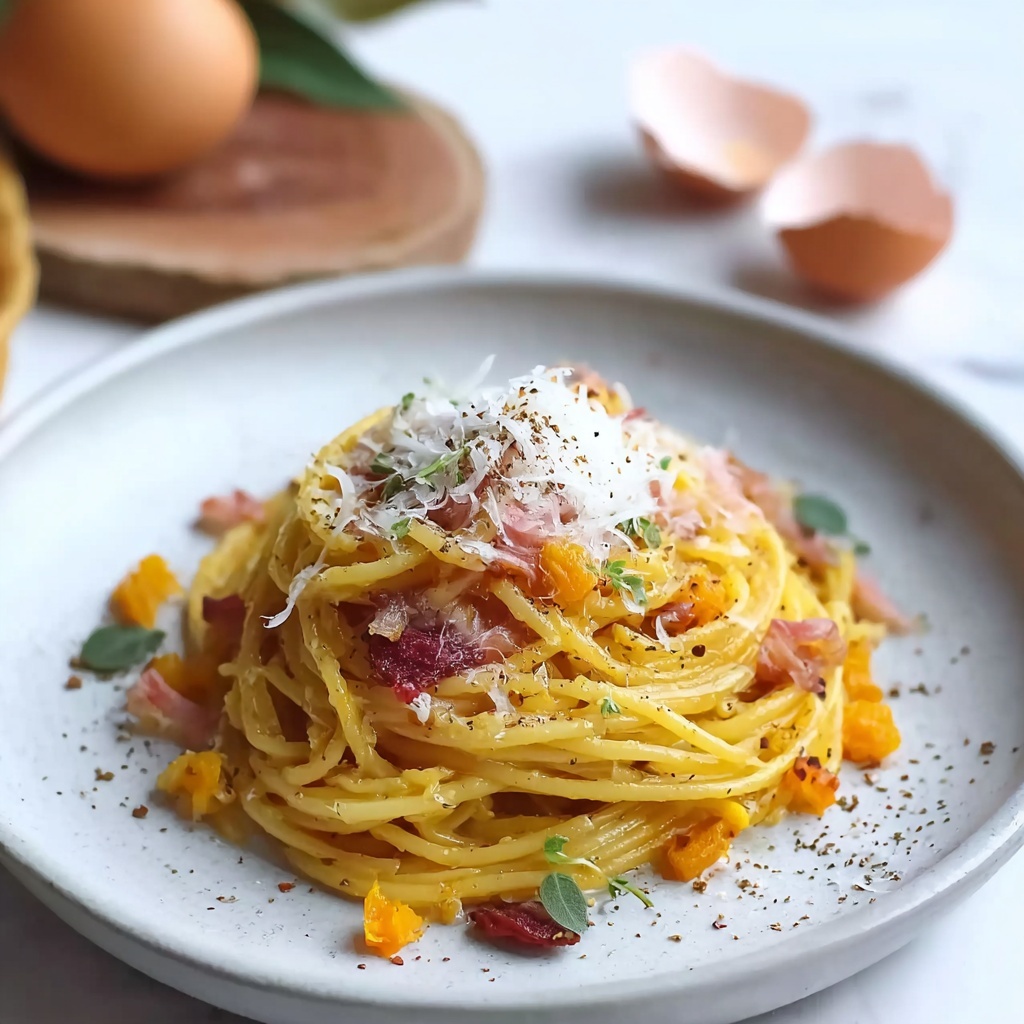
If you have ever wondered how to create a truly authentic Italian classic that bursts with flavor while keeping things beautifully simple, then this Spaghetti Alla Carbonara Recipe is exactly what you need. This dish combines silky pasta, crispy guanciale, and a luxurious cheese-egg sauce that magically comes together in just minutes. It’s the type of recipe that feels like a hug on a plate, perfect for sharing with friends or making any evening feel special.
Ingredients You’ll Need
The magic of this Spaghetti Alla Carbonara Recipe lies in its simplicity. Each ingredient plays a crucial role: the pasta gives structure, guanciale adds richness and crunch, eggs and Pecorino Romano marry into a creamy sauce, and a touch of freshly cracked pepper finishes it all off with a hint of spice.
- 400 g (14 oz) spaghetti: Use high-quality durum wheat for the perfect al dente bite.
- 175 g (6 oz) guanciale: This cured pork cheek delivers an unbeatable savory flavor and crispy texture that’s the heart of the dish.
- 2 large eggs + 2 egg yolks: Room temperature eggs make the sauce smooth and creamy without scrambling.
- 100 g (3.5 oz) freshly grated Pecorino Romano or Parmesan: Adds salty, tangy depth and helps create the silky sauce.
- 1 tbsp (15 g) cooking salt: For the pasta water to season the spaghetti perfectly from within.
- 1/4 tsp freshly cracked black pepper: Essential for that subtle heat and aromatic kick, plus extra for serving.
- 1 clove garlic (optional): Adds a gentle aromatic note if you love a touch of garlic.
- Drizzle of extra-virgin olive oil (optional): Useful to toss the pasta if it clumps after draining.
- 1/2 cup (120 ml) reserved pasta cooking water: The secret weapon to creating the luscious, creamy sauce.
How to Make Spaghetti Alla Carbonara Recipe
Step 1: Cook the Spaghetti
Bring 4 liters (4 quarts) of water to a rolling boil and add the tablespoon of cooking salt. Toss in the spaghetti and cook until al dente — firm but tender with a tiny bite. Before draining, remember to save 1 cup (240 ml) of the pasta water; this starchy liquid is crucial for that perfect sauce. Drain the pasta immediately after to preserve the texture.
Step 2: Prepare the Guanciale
While the pasta is cooking, heat a non-stick pan over medium-high heat and add the guanciale batons. Cook them for 4 to 5 minutes until golden and crispy, letting the fat render out beautifully. If you choose to use garlic, toss it in during the last minute to release its aroma without burning. No need for extra oil — the guanciale fat does all the work.
Step 3: Mix the Eggs and Cheese
In a large bowl, whisk together the two whole eggs and two yolks until smooth and combined. Stir in the freshly grated Pecorino Romano or Parmesan cheese along with 1/4 teaspoon of freshly cracked black pepper. This mixture forms the creamy base of your carbonara sauce, ready to embrace the pasta.
Step 4: Combine Pasta and Guanciale
Right after draining, transfer the hot spaghetti into the pan with the crispy guanciale and its flavorful fat. Toss everything thoroughly to coat each glutenous strand with that rich pork essence, building the foundation of your carbonara.
Step 5: Create the Creamy Carbonara Sauce
Remove the pan from the heat promptly — direct heat could scramble the eggs. Now, pour the pasta and guanciale into the egg-cheese bowl. Add 1/2 cup (120 ml) of the reserved pasta water and stir vigorously. The heat from the pasta cooks the eggs gently while the water helps achieve a silky, velvety sauce. If it feels too thick, add more pasta water a little at a time until you hit that perfect consistency.
Step 6: Final Touches and Serve
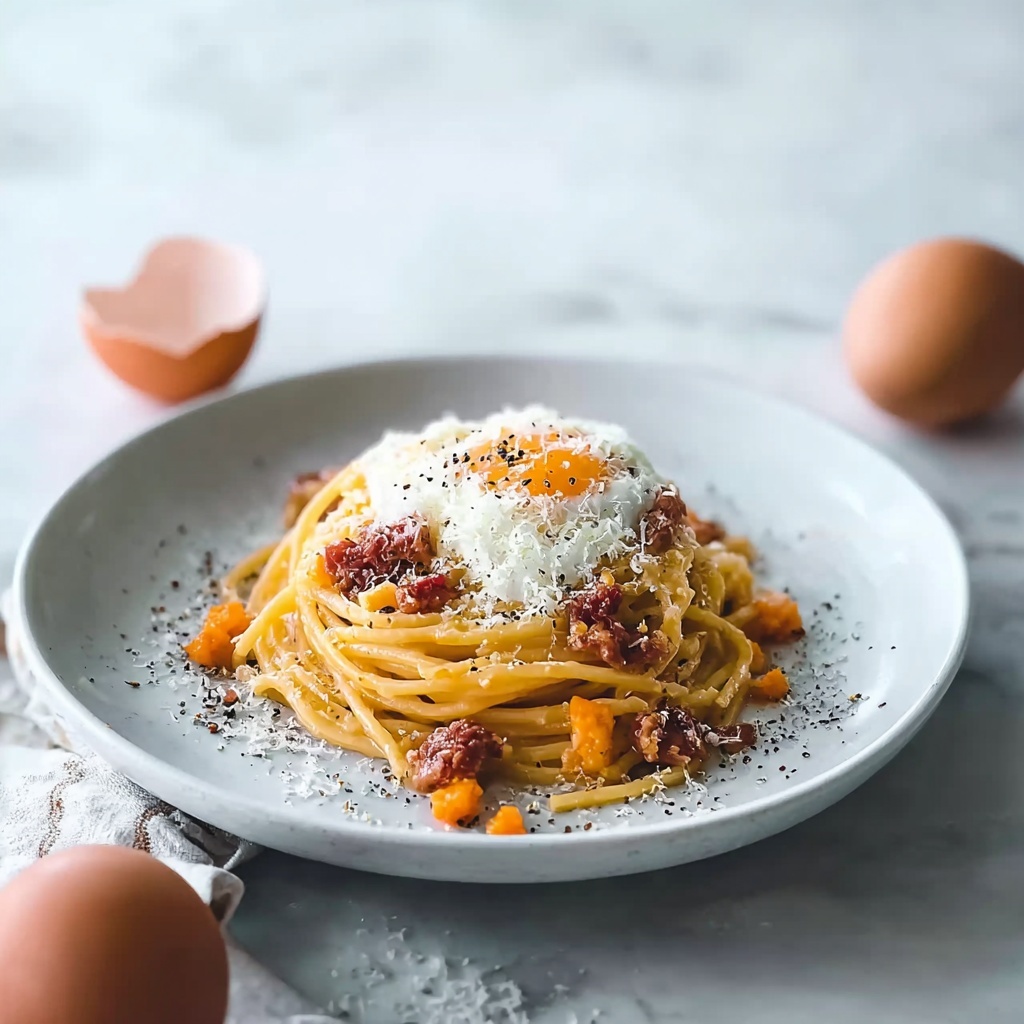
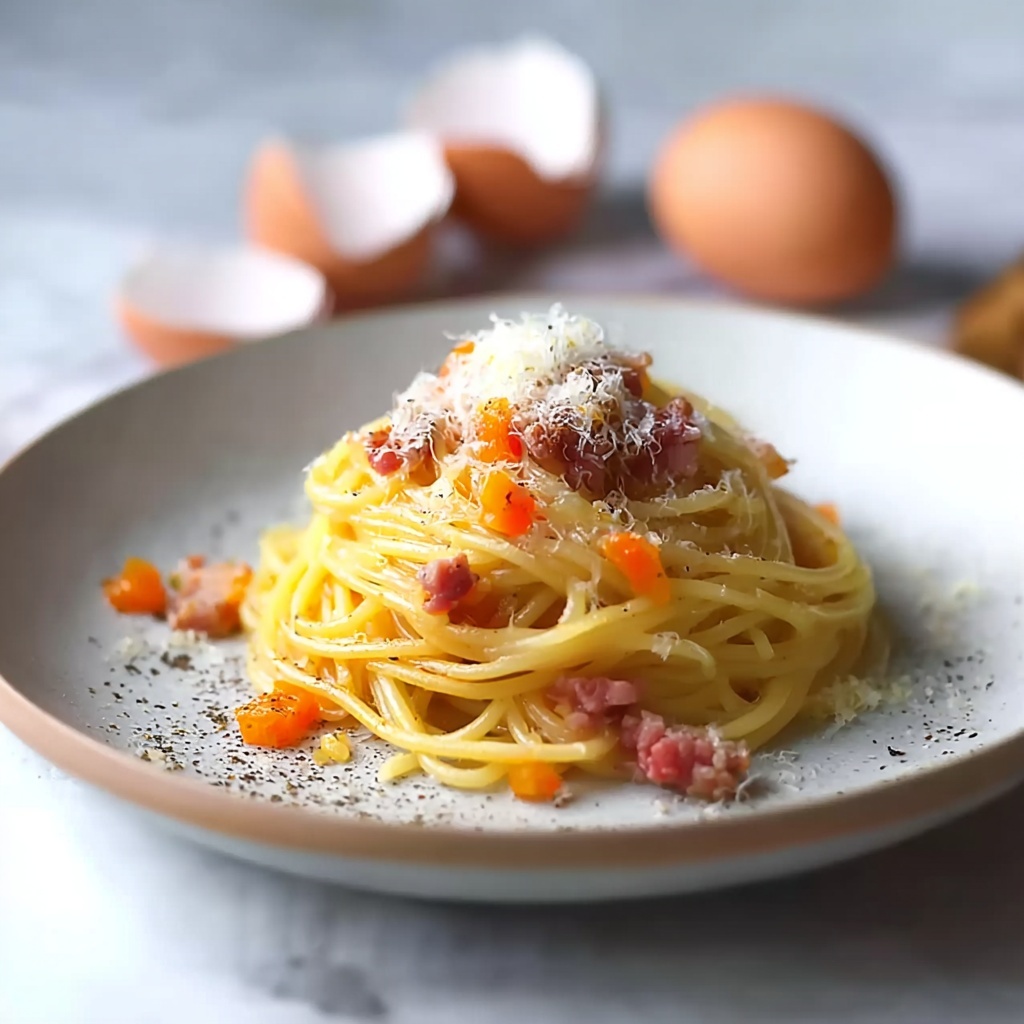
Give your carbonara a taste and add more freshly cracked black pepper if you like it peppery. Serve immediately in warm bowls, sprinkled with extra grated Pecorino and a pinch of black pepper for that signature Italian finish. For a charming presentation, twirl the pasta onto forks—inviting and elegant.
How to Serve Spaghetti Alla Carbonara Recipe
Garnishes
A sprinkle of extra Pecorino Romano cheese and a crack or two of fresh black pepper elevate the flavors and add a finishing touch of texture and aroma. Some fresh parsley can add a pop of green color, but traditionally, simplicity reigns supreme.
Side Dishes
Keep the sides light and fresh to balance the richness of the carbonara. A crisp green salad with lemon vinaigrette or roasted seasonal vegetables works beautifully. Garlic bread might be tempting but can overshadow the delicate flavors of the dish.
Creative Ways to Present
For a wow factor, serve the carbonara in warmed pasta bowls to keep it cozy longer. Twirling the spaghetti carefully onto a fork and standing it upright on the plate is both visually delightful and practical. Pair it with a glass of chilled Italian white wine for a complete experience.
Make Ahead and Storage
Storing Leftovers
Spaghetti Alla Carbonara Recipe is best enjoyed fresh, but leftovers can be stored in an airtight container and refrigerated for up to 2 days. Avoid storing for too long as the creamy sauce can break down and become grainy.
Freezing
Freezing carbonara is not recommended because the egg-based sauce does not freeze well, often separating and becoming watery upon thawing. It’s best to make just the right amount to savor immediately.
Reheating
To reheat leftovers gently, warm the spaghetti slowly in a skillet over low heat, adding a splash of water or extra-virgin olive oil to revive the sauce’s creaminess. Avoid the microwave to prevent scrambled eggs and uneven heat.
FAQs
Can I use bacon instead of guanciale in this Spaghetti Alla Carbonara Recipe?
While guanciale is traditional and preferred for its rich flavor and texture, bacon can be used as a substitute. Opt for unsmoked or lightly smoked bacon to keep the authentic taste closer to the original.
Why is the egg mixture added off the heat?
Adding the egg mixture off the direct heat prevents the eggs from scrambling, which ensures a silky, creamy sauce rather than a scrambled egg texture. The residual heat from the pasta gently cooks the eggs.
Can I make this dish without Parmesan or Pecorino cheese?
Cheese is indispensable in this recipe for adding saltiness and creaminess. If you must skip it, consider adding a pinch of salt and more black pepper, but bear in mind it won’t have the same depth of flavor.
What type of pasta works best for carbonara?
Spaghetti is the classic choice and allows the sauce to coat each strand beautifully. However, you can experiment with fettuccine or bucatini, which also hold the sauce well.
Is it okay to add cream to Spaghetti Alla Carbonara Recipe?
Purists steer clear of cream to preserve the dish’s authentic character. The creaminess comes naturally from the eggs and cheese with pasta water. Adding cream makes it heavier and strays from the traditional recipe.
Final Thoughts
Making this Spaghetti Alla Carbonara Recipe is like inviting a little piece of Italy into your kitchen. It’s a recipe that’s simple, quick, and incredibly satisfying — perfect for busy weeknights or for impressing loved ones without stress. Give it a try, savor every bite, and share the joy of homemade carbonara with those you care about. You’ll soon see why it’s a timeless favorite!
Print
Spaghetti Alla Carbonara Recipe
- Prep Time: 5 minutes
- Cook Time: 15 minutes
- Total Time: 20 minutes
- Yield: 4 servings
- Category: Main Course
- Method: Stovetop
- Cuisine: Italian
Description
A classic Italian pasta dish from Rome, Spaghetti Alla Carbonara features a luscious creamy sauce made without cream, relying on eggs, Pecorino Romano cheese, crispy guanciale, and freshly cracked black pepper to coat perfectly al dente spaghetti. This quick 20-minute recipe highlights authentic ingredients and technique for a rich, comforting meal.
Ingredients
Pasta
- 400 g (14 oz) spaghetti, preferably high-quality durum wheat
- 1 tbsp (15 g) cooking salt, for pasta water
- 1/2 cup (120 ml) reserved pasta cooking water
Carbonara Sauce
- 175 g (6 oz) guanciale, sliced into 0.5 cm (1/5 inch) thick slices then cut into batons
- 2 large eggs + 2 egg yolks, room temperature preferred
- 100 g (3.5 oz) freshly grated Pecorino Romano or Parmesan cheese
- 1/4 tsp freshly cracked black pepper (more for serving)
- 1 clove garlic, minced (optional)
- Drizzle of extra-virgin olive oil (optional, for tossing pasta after draining if sticking)
Instructions
- Boil Pasta: Bring 4 liters (4 quarts) of water to a rolling boil with 1 tablespoon of cooking salt. Add the spaghetti and cook until al dente according to package instructions. Before draining, reserve 1 cup (240 ml) of the pasta cooking water, then drain the pasta immediately.
- Cook Guanciale: While the pasta cooks, heat a non-stick pan over medium-high heat and add the guanciale batons. Cook for 4-5 minutes until golden and crispy, releasing their fat. If using, add minced garlic during the last minute. No additional oil needed.
- Prepare Egg Mixture: In a large bowl, whisk together two whole eggs and two egg yolks until smooth. Stir in the freshly grated Pecorino Romano or Parmesan cheese and 1/4 teaspoon freshly cracked black pepper until combined.
- Toss Pasta in Guanciale Fat: Immediately after draining, add the hot pasta to the pan with the crispy guanciale fat. Toss thoroughly to coat all strands in the rendered fat.
- Create Carbonara Sauce: Remove pan from the heat to prevent scrambling the eggs. Transfer the pasta and guanciale fat mixture to the bowl with the egg and cheese mixture. Add 1/2 cup (120 ml) of reserved pasta water and stir vigorously. The heat from pasta gently cooks the eggs, forming a creamy sauce. Add more pasta water by teaspoonfuls if sauce is too thick.
- Serve: Taste and adjust seasoning with freshly cracked black pepper. Serve immediately in warm bowls garnished with extra grated Pecorino and a pinch of black pepper. Optionally, twirl pasta on forks for an elegant presentation.
Notes
- Use guanciale for authentic flavor; pancetta is a substitute but will alter taste slightly.
- Be careful not to add the egg mixture directly on high heat to avoid scrambling.
- Pasta water is key for emulsifying and creamy texture without cream.
- Serve immediately to enjoy the best texture and flavor.
- Room temperature eggs mix better with hot pasta, ensuring a smooth sauce.